
Case studies: Battery testing
A 2,000 A cranking tester for starter batteries
A test cabinet that loads a battery with up to 2,000 A for 30 seconds, or with a lower current for longer, and records how its voltage holds.
Customer: Sunlight
Case studies: Battery testing
A test cabinet that loads a battery with up to 2,000 A for 30 seconds, or with a lower current for longer, and records how its voltage holds.
Customer: Sunlight

Sunlight is a large industrial group that produces many types of industrial and special batteries. It has been expanding continuously in recent years, acquiring similar companies around the world and entering new markets in batteries and related energy systems.
Sunlight has a research and development division with hundreds of specialised engineers. It also has an in‑house test facility and team that certify its batteries against international standards, including military standards for some products.
Standard test equipment covers most of its needs. For some extreme test conditions it is not suitable, and the special tools on the market are either over‑specified or too expensive.
One such condition is cranking. A starter battery has to deliver a very high current for a few seconds, and its voltage must not fall below a set limit while it does. To check that, a test needs a load that draws up to 2,000 A, reaches that current almost at once, and does the same every time.
We designed and built a cranking tester for Sunlight, as one cabinet on wheels. Inside are 512 resistive loads in sixteen load modules. Each load is switched electronically, and the tester sets the current by choosing how many loads are on.
The tester draws up to 2,000 A for 30 seconds. For longer tests it works at a lower current, up to 300 A continuously.
The current reaches its set value within the first 100 ms. A test can be a single pulse or a ramp, with the hold current, the duration and the ramp time set by the operator. The tester measures the current and the battery voltage throughout, and it stops the test if the voltage stays below the limit for longer than a set time.
The tester is run from a PC program that we wrote, over Ethernet. The operator keeps tests as templates, watches the current and voltage live, and saves each run as a file. The tester also has its own web page for status, network settings and firmware updates.
A self‑test switches every one of the 512 loads in turn and takes about four minutes. Temperature sensors and two groups of fans keep the loads cool, and the tester enforces a rest time between two tests.

The cranking tester was delivered in September 2023. It helped Sunlight test prototype battery packs and optimise production.

PDF · 3 pages · 1.0 MB
Take this case study with you as a PDF, to read later or to pass on to a colleague. Enter your work email and we will send you the download link.
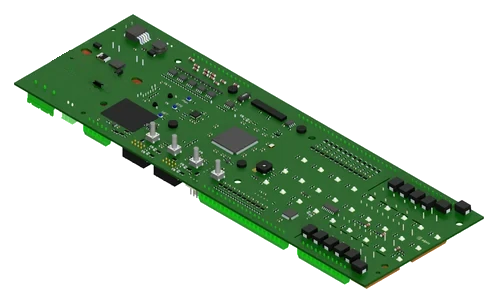
Hospitals
G. SAMARAS S.A.
Embedded platforms that monitor, record and signal the working parameters of medical gases in hospitals, and a nurse call system with two‑way voice.
Read the case study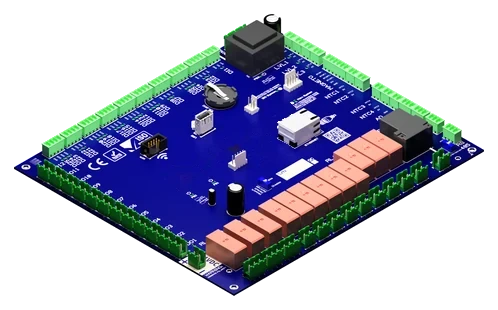
Agriculture
Milkplan
Two purpose‑designed controller platforms with their own sensor electronics, communications, telemetry and remote update.
Read the case study
Grid infrastructure
PPC Inspectra
Specialised test systems won in international bids over many years, among them an artificial ageing system for high‑power grid cables.
Read the case studyWork with us
Tell us your target specifications and constraints. We’ll engineer the solution, from prototype to production.
elpra S.A. · elpra.gr/case-studies/battery-cranking-tester/ · info@elpra.gr · +30 2310 464 021